
Choosing a space
Top 10 coworking considerations
Nobody quits a coworking space because the coffee was mediocre. They quit because of noise, because the meeting rooms were always booked, because the drive got tedious, or because they never quite belonged. All four are visible before you sign, if you know where to look.
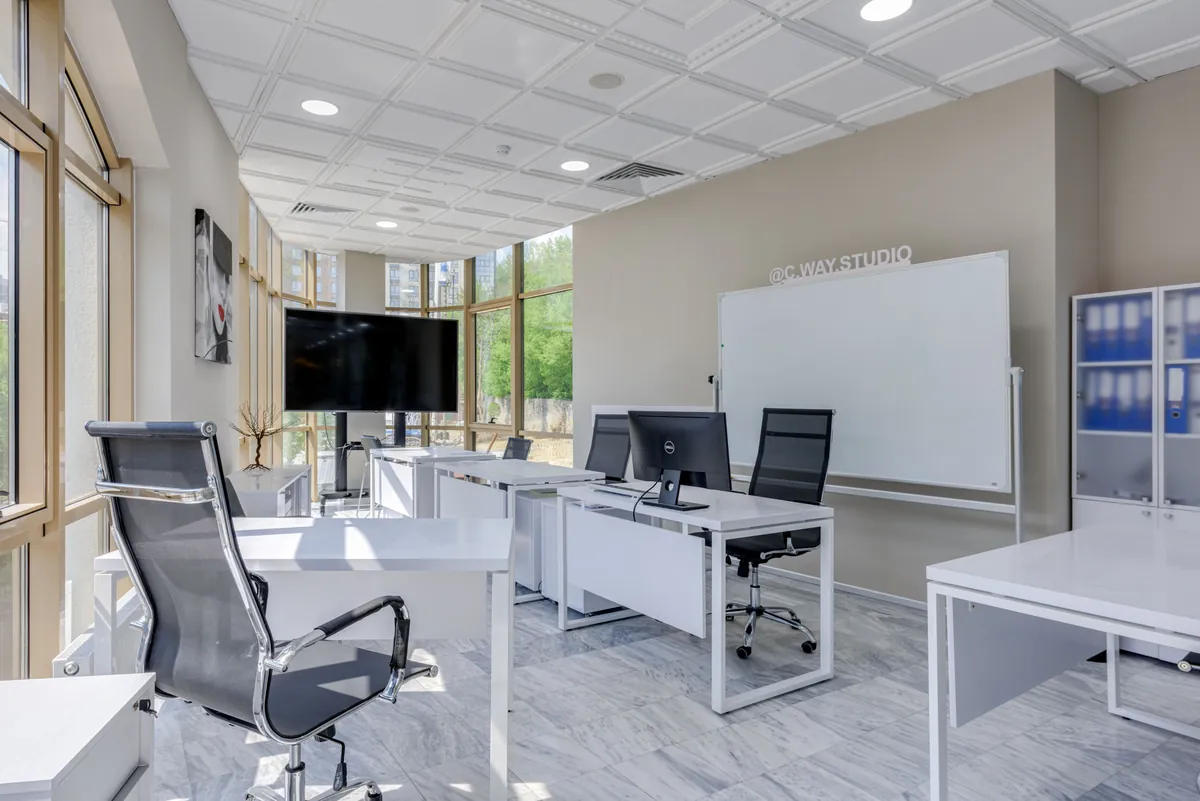
Here is the problem with touring a coworking space: you are being shown it at its best hour, by someone whose job is to fill desks, in a building you have never sat in for longer than twenty minutes. The tour is a sales environment, and it is optimised accordingly. Tours happen mid-morning or mid-afternoon, rarely at eleven on a Tuesday when the floor is at capacity and every meeting room is spoken for.
None of that is dishonest. It is just insufficient. What follows is the list of things that actually determine whether you will still be a member in six months, roughly in order of how often they are the reason people leave.
1. Acoustics, before absolutely anything else
Ask anyone who has cancelled a coworking membership why, and the answer is almost never price. It is noise. Specifically it is one recurring, identifiable noise: the person who takes calls at their desk, the sales team in the corner, the reception area that echoes into the workspace.
The physics is not subtle. The contemporary workspace aesthetic favours exposed ceilings, polished concrete, glass partitions, and minimal soft furnishing. Every one of those surfaces reflects sound. In a room with nothing to absorb it, a single conversation does not stay local, it fills the volume, and your brain cannot ignore intelligible speech. That is a well documented effect: background chatter you can make out words in is dramatically more disruptive to focused work than louder but unintelligible noise.
What to do on the tour: stop talking and stand still for a full sixty seconds. Most people never do this because it feels awkward with a salesperson beside you. Do it anyway. Can you make out actual words from three desks away? If yes, you will be able to every day, and no pair of headphones fully solves it.
The question that reveals everything: where are people supposed to take calls? A space that has genuinely thought about sound answers instantly and specifically: those four booths, the corridor, the rule is no calls in the quiet room. A space that has not will say people "usually just step outside," which is code for people take calls at their desks and we have decided not to police it.
2. What a desk actually gets you, in plain terms
Every operator uses different words for the same four products, which makes comparison shopping unnecessarily hard. Translate everything into physical reality before you compare prices.
Hot desk, flex, open: any unoccupied seat, first come first served, take everything with you at the end of the day. Cheapest full-time option.
Dedicated, resident, fixed: the same physical desk every day, yours, usually with a locker or a pedestal drawer. You can leave a monitor, a keyboard, a chair adjusted to your back.
Private office: a lockable room within the facility, priced per room rather than per person.
Virtual, mail, address: no desk at all. A business address, mail handling, sometimes a few meeting hours.
The upgrade almost everyone eventually makes is hot desk to dedicated, and the reason is rarely the desk itself. It is two things: not packing up every evening, and being able to sit somewhere you have already learned is quiet. On a hot desk you renegotiate your working conditions every single morning, against colleagues who arrived earlier and already know which seats are good.
3. Meeting room math, done with your real calendar
This is where advertised price and real cost diverge most sharply. Get four numbers: how many hours are included per month, whether unused hours roll over, the hourly rate once you exhaust them, and how far in advance the good rooms get booked.
Then apply your actual week rather than an optimistic one. Two client calls a week that you would not want to take on the open floor is roughly eight to ten hours a month, which exceeds what many mid-tier memberships include. If you run workshops or interviews, you are well past it.
The scenario nobody plans for: it is Thursday, a call lands on you with an hour of warning, and every room is booked. Ask what members actually do in that situation. If the honest answer is that they take it at their desk, you have just learned something important about the noise on that floor as well.
4. The internet, tested rather than described
Every space on earth advertises fast wifi. Run your own speed test while you are standing there, ideally during a busy period rather than a quiet tour slot, and ask two questions the brochure will not answer.
Is there a redundant connection? A single business line means that when it goes down, ninety people simultaneously cannot work, and you will be one of them. Spaces with a failover connection will tell you proudly, because it costs them money.
How many devices at peak? A connection that feels quick with fifteen people on it behaves differently with ninety, each running video calls, cloud backups, and a phone on the same network.
If your work involves uploading anything substantial, test upload specifically. Business connections are frequently asymmetric, and the upload figure is often a small fraction of the headline download number. Video editors and photographers discover this in week two.

5. Hours, access, and whether the building agrees
Twenty-four hour access is one of the most elastic phrases in the industry. It can mean a fob that opens the door at any hour. It can also mean the main entrance is open until six, after which you need to know about the side door, and the lift requires a card you have not been issued.
Ask what physically happens if you are still working at nine on a Friday. Then ask the question that matters more and almost nobody asks: does the heating and cooling stay on? Comfort systems in commercial buildings frequently run on business-hours timers controlled by the landlord rather than the operator. Access without climate control is technically access and practically useless in February or August.
6. Who else is in the room
The community is genuinely the product, and it is the single hardest thing to evaluate from a tour, because you are meeting a salesperson rather than the members.
Look at the composition. A floor of freelancers and remote employees is quiet and heads-down. A floor with three small sales teams is energetic and loud. Neither is better, but they suit completely different work, and the marketing photographs for both look identical.
The question to ask a member rather than staff: how long have most people here been members? Long tenure means people are getting what they came for. High churn means something is wrong that a tour will not show you, and the staff may not volunteer.
7. The commute you will actually make in February
People consistently overestimate how far they will travel to a desk they are paying for. The pattern is dependable enough to plan around: a space ten minutes away gets used roughly as often as intended, twenty minutes gets used somewhat less, and half an hour or more gets used enthusiastically for a month and then twice a week, then once.
Parking does the same thing more quietly. If parking costs money, that belongs in your monthly total. If it takes ten minutes to find, that is twenty minutes a day of friction, and friction is what turns a Tuesday visit into working from home.
The number that actually matters is not membership price, it is cost per day attended. A cheaper space you visit four times a month costs more per use than a pricier one you visit twelve times.
8. Contract length, and what happens if they close
Month to month costs more per month than a six or twelve month term, and for a first membership it is almost always worth the premium, because you do not yet know how you will use the space. Most people change their pattern within the first quarter.
If the longer term is meaningfully cheaper and you are tempted, ask three questions: is there a buyout if you need to leave, can the membership be transferred, and does the discount claw back retroactively?
Then ask the uncomfortable one. Coworking operators close, relocate, and get acquired more often than most industries, and the pandemic accelerated all three. Well regarded spaces with good reviews and real local press coverage have shut with little warning. A short first term is your protection against a decision that is not yours to make.
9. The costs that are not on the price list
None of these are deceptive. They are simply on a different page, and they routinely reorder a comparison between two spaces:
- Printing beyond a modest monthly allowance, often charged per page.
- Mail handling, and separately, permission to register a business at the address.
- Lockers or storage, sometimes bundled with a dedicated desk and sometimes not.
- After-hours or weekend access as an add-on.
- Guest passes, and what a regularly visiting colleague costs.
- Event or larger meeting space, priced separately from standard rooms.
- A deposit, and the specific conditions for its return.
- Parking, which downtown can approach the cost of the desk itself.
10. The second visit, deliberately at the wrong time
If you do only one thing on this list, do this one. Ask for a day pass and use it on a Tuesday or Wednesday morning, which is peak occupancy in nearly every space. Then do a genuine morning of work. Take a call. Get coffee. Use the bathroom. Sit where you would actually sit rather than where the tour seated you.
Three hours of that will teach you more than any number of tours, because you will experience the floor as a member rather than as a prospect. You will find out whether the quiet corner is quiet at eleven, whether the wifi holds up when the room is full, and whether the person next to you takes calls at their desk.
Most spaces will hand you the pass happily, and that willingness is itself a signal. Operators who know their space works well under real conditions are pleased to let you see it. Hesitation tells you something too.
If you only do three things: visit twice, once at peak. Run your own speed test. Ask a member, not a salesperson, how long people tend to stay.
The things this list deliberately leaves out
Amenities, mostly. Coffee quality, beer taps, plants, the standing desk count, the branding on the walls. Not because they are worthless, but because they are the easiest things to fix and therefore the least informative about how a space is run. Any operator can buy a better coffee machine next month. None of them can quickly fix a floor plate with bad acoustics, a landlord who controls the thermostat, or a meeting room ratio that was wrong from the day they signed the lease.
Judge spaces on what is difficult to change. The rest follows.
Related reading: what coworking costs, what makes a floor work, and the building behind the workspace.
Frequently Asked Questions
What should I check before joining a coworking space?
Noise, meeting room availability, internet, real access hours, the commute, and how long the operator has been in business. All ten checks are on this page. Noise is the one that ends the most memberships.
When should I visit a coworking space before joining?
Tuesday or Wednesday mid-morning, when spaces are at their busiest. A quiet Friday tour shows you the room. A busy Tuesday shows you the membership.
How do I test a coworking space's wifi?
On a day pass at peak hours, with your real work: a speed test, a video call, and a large upload, late morning midweek. Wifi that struggles at peak is common and never shows up on a tour.
What questions should I ask on a coworking tour?
How long the space has operated, who owns the building, how long the operator's own lease runs, and what happens to memberships if the location closes or moves. Direct answers are a good sign in themselves.
Should I sign a twelve month contract for the discount?
Not at first. Use the space month to month until you know your real attendance pattern, then commit if the numbers work. Before signing anything long, ask what happens to the remaining term if the space closes.